The Importance of Unmasking in Autism || Benefits, Challenges and Internalised Ableism
Last month my mental health hit an extreme low again and I was worried I wouldn’t survive March without serious intervention.
Accompanying this quiet internal breakdown was a faint sense of familiarity. A well-acquainted frustration directed towards my self-proclaimed ‘broken’ brain, mourning my own inability, confused as to why I still feel like an alien to myself.
Regardless of how self-accepting I try to appear in these blog posts, in my personal life I have been struggling immensely with my autism and how it impairs my day-to-day.
I’ve been doing a great deal of reflection recently after being forced to slow down and I find myself questioning: how did I reach this point again?
Despite a diagnosis, EHCP, years of mental health support and education into neurodiversity, I seem to have found myself in a position where I have been completely ignoring the fact that I’m autistic - treating my neurotype as if it’s something that can be shoved into a cardboard box and transferred to the attic, with a note to, ‘DEAL WITH THIS LATER!’ I’ve been pushing my brain to it’s limits, refusing accommodations and masking all the time, and now have the gall to act shocked when it has eventually buckled.
What did I think was going to happen?
After spending the majority of my adolescence in the refuge of my own home, blissfully free to behave as strangely as I’d like, I’ve started stepping out into the 'real world’, working and socialising (albeit, still to a lower degree than most people my age), and I’ve seen how suddenly that pesky, all-pervasive mask has fixed itself intently upon my entire existence all over again.
It’s maddening to look back and track your retreat inwards and come to the conclusion that somewhere along the way you have lost yourself once more.
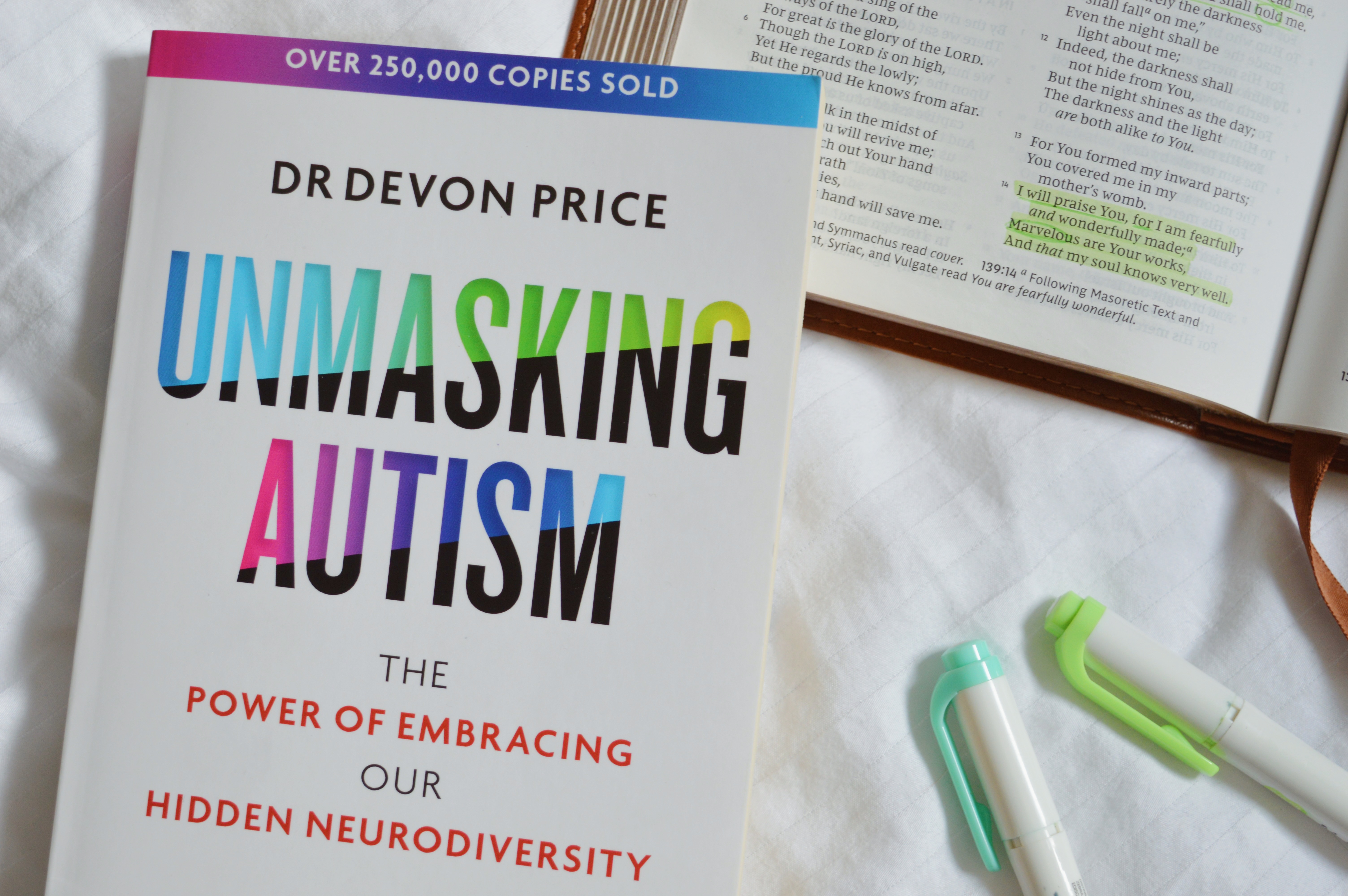
Recently, I picked up Dr Devon Price’s ‘Unmasking Autism.’ Reading this book, I can feel unused mechanisms beginning to slot themselves together again as I tentatively start to re-accept my neurodiversity and understand the importance of fundamentally unmasking.
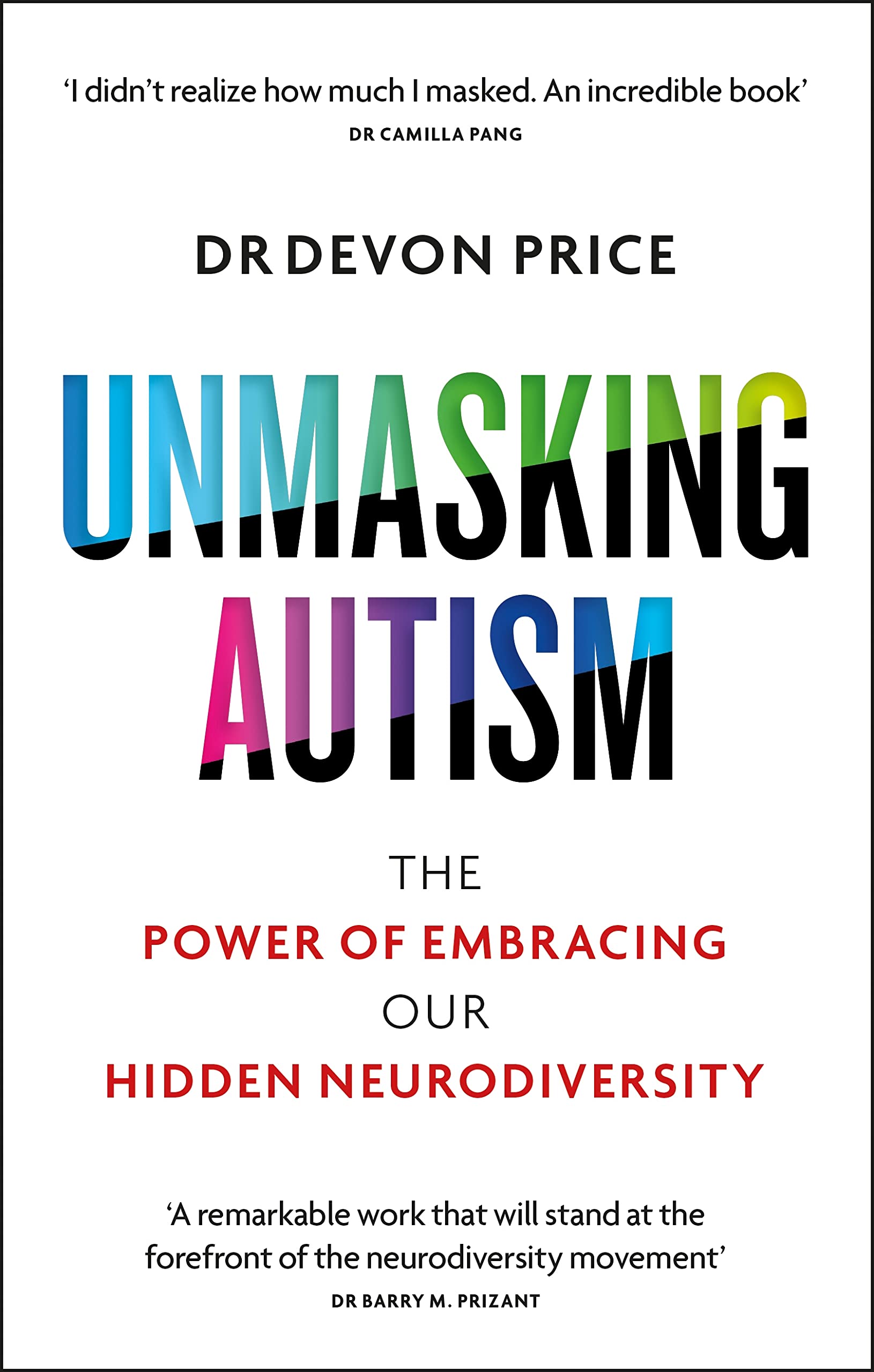
The cover of Dr Price’s book
Which brings me here, writing this out and sharing it with you.
But first, what does it actually mean to ‘mask’?
What is Masking?
Also commonly referred to as ‘camouflaging,’ masking for autistic people involves hiding out autistic traits in order to fit in with a neurotypical society. Due to the stigma that still remains attached to autism, we will often attempt to suppress our own needs and mimic the behaviours of the non-autistic people we are around, constantly policing the way we appear to others.
Some examples could include: suppressing a need to stim; forcing eye contact; or avoiding conversations that revolve around special interests to avoid being labelled as weird.
Personally, I rarely have a conversation with anyone outside of my home where I’m not hyperaware of how much I’m reciprocating eye contact, facial expression, body language and general tone.
Naturally I can appear quite flat - not making direct eye contact and speaking with a monotone voice - but when talking to others I will force myself to make at least some eye contact and emote brightly with my voice when I can catch it. It feels as though I am putting on a performance, and involves a lot of constant calculation to improvise what I’m going to do next.
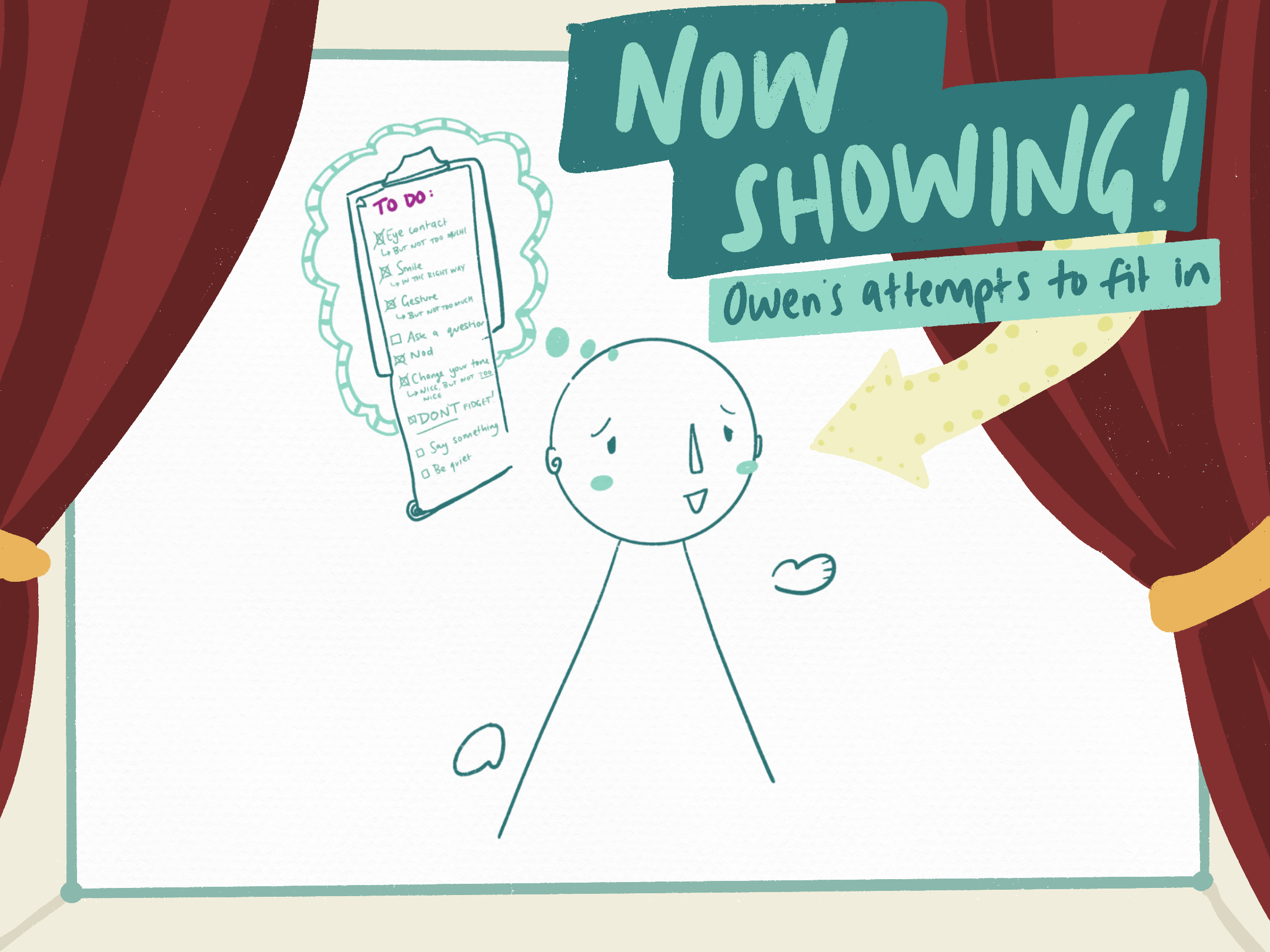
Often, I’m focusing so intently on masking that I can’t follow the actual flow of the conversation, so my reactions become mostly guess-work, which consequently leads to some strange interactions!
Masking can be done both consciously and subconsciously and is extremely exhausting. Although most people ‘mask’ to some degree, for autistic individuals this mask remains on a lot of the time, and can often spill over into our private lives as well - including the way that we view and treat ourselves.
Consequences of Masking
Autistic masking has been proven to have links to increased risk for low mental health and self-esteem. Autistic people who consistently mask report higher rates of anxiety and depression, and one study demonstrated ‘camouflaging’ was linked further to the increased rates of suicidality among autistic adults.
Masking could be killing us.
Feeling the need to hide integral parts of your person in order to ‘fit in,’ infers that who you are simply isn’t good enough, which, as you may be able to imagine, brings with it mountains of shame and self-esteem issues.
Being taught to suppress our needs in social situations means high-masking autistics can become uncomfortable expressing consent (or lack of it) and speaking up against others. This is especially common among women, who are taught to be ‘quiet’ or ‘ladylike,’in our patriarchal society by default - regardless of neurodiversity. As a result of this, autistic people can find themselves in dangerous situations as their mask hinders them from voicing their own discomfort.
Ironically, constant masking can also lead to feelings of isolation and loneliness.
Although camouflaging is supposed to help us integrate into conversation better, I often find it to do the complete opposite: I am left feeling entirely invisible. When with others, they are never getting to see me, but rather a performance I’ve put together for them; the abridged version of my interests, behaviour and challenges. Especially when part of a larger group, while conversation flows I begin to feel left out as my focus shifts to frantically calculating what needs to be done or said next, instead of actually remaining present.
This can also bring problems for building and maintaining relationships. As I become closer to a person, the mask may slip slightly, and I’m unsure as to how a person would react.
The fatigue and anxiety brought on by the perceived need to constantly mask in social situations can cause autistic people to shut themselves away and avoid socialising altogether. It simply becomes too much.
Challenges Unmasking Brings
But taking off that mask brings its fair share of challenges as well.
For some marginalised groups, unmasking can cause danger - especially for black or brown individuals, women or gender non-conforming folk who try to negate prejudices through masking in a different sense.
In a society that remains hostile to those deemed ‘other,' camouflaging provides a safety net - a net which is sadly more important to groups already at a larger risk of discrimination.
A higher need and ability to mask is believed to be why these groups remain under-diagnosed, and how autism became seen as a diagnosis mostly prevalent in white boys and young men; although in recent years, research has begun to shift that preconception.
Allowing yourself to be visibly autistic also opens up opportunities for bullying or ridicule, which can in turn lead to social isolation. To counteract that, some people find it helpful meeting other autistic or neurodivergent individuals, as there is less of a demand on masking when around people that you know just get how your brain works.
Unmasking can even bring changes to personal circumstances - and it’s widely known that change isn’t really something autistic people particularly love!
Realising that you can’t maintain both a full-time job and your own sanity, not because of personal weakness but due to disability might lead to a decision to quit or take on less hours. Opening up to close friends, family and partners about your autism and allowing them to see past the mask can impact relationships. All of this could initially cause anxiety, but taking steps towards building a life more in line with your own neurodiversity will likely pay off in the long run.
Where do I even start?
I’ll get back to you on that one… 😅
Being completely honest, I don’t yet know! This is still a process I’m having to re-learn now that I’ve got new social and professional responsibilities.
It’s incredibly jarring to have found myself in a position where I’ve got to re-accept the fact that I’ve got a disability, learn how to advocate for my own accommodations and actually begin to feel comfortable putting them in place… again.
However, I think reflecting on your own mask is a good starting point.
Figure out what it looks like. Do you find yourself falling into excessive people-pleasing, forcing eye contact and body language, over-scripting conversations ahead of time or refusing accommodations?
It’s important to also think about where the need to camouflage originated. I would highly recommend Dr Devon Price’s book for all of this, as it includes prompts for reflection and action throughout and it’s been wonderful in helping me to confront my own penchant for masking.
Once you’ve figured that out, I guess you can start slowly unravelling it.
In my own life, I know that I need to begin to pay greater attention to my needs and actually take steps to accommodate them in public. For example, I have a lot of sensory sensitivities regarding sound, but I often find myself refusing to wear my ear plugs or noise-cancelling headphones because I either don’t want to be seen as strange or deal with the implications that I’m weaker for being ‘unable to handle the real world,’ as some people believe.
I also used to be very confident disclosing the fact that I’m autistic to new people in my life, but recently I’ve noticed a really strong resistance to doing so. I worry that I’ll be looked down upon or treated differently.
To do all of this however, I’ve really got to work to unpack all of the personal shame and internalised ableism I seem to have acquired over the past two years… which is not an easy task!
A faith-based perspective...
My faith as a Christian impacts every area of my life, including my relationship to my own autism. As I reevaluate the ways I think about my own brain, I think it’s important to place God at the centre of it all through prayer and most importantly... trust.
God has made me - and you, lovely reader - in His image.
He has numbered every hair on your head, He knows your dreams and your greatest fears, and He is well acquainted with your neurodiversity. He has a plan for each and every person reading this blog, and the way that your brain processes the world factors into that.
He is not a God who makes mistakes; and despite how incredibly difficult it can be, I trust that God made me autistic for a purpose - even if that purpose may seem small at face value.
As the heavily-quoted verse goes:
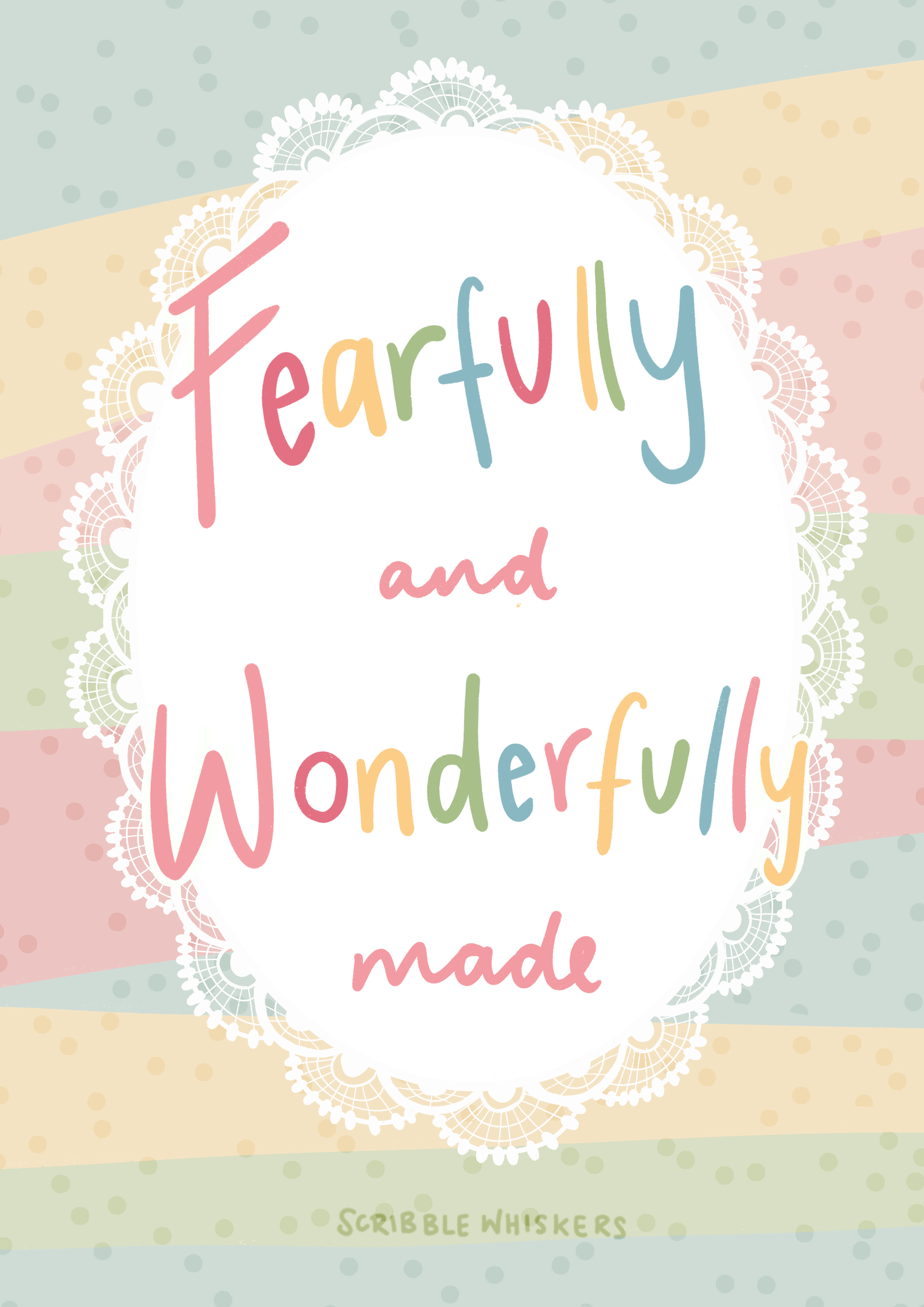
"I praise you, for I am fearfully and wonderfully made.
Wonderful are your works, my soul knows it full well."
Everyone, regardless of how they process information or communicate is counted within the wonderful works of God.
But how often do we forget that about ourselves?
I still haven’t really figured out what steps I need to take for all of this, but I will keep you posted. I’m hoping to continue writing for this blog, sharing more about my life as an autistic girl navigating this very confusing neurotypical world, especially as I get ready for University round 2.
In the meantime, I wish you well, dear reader.
Yours sincerely,
Owen @ ScribbleWhiskers
"I praise you, for I am fearfully and wonderfully made.
Wonderful are your works, my soul knows it full well."
Psalm 139:14, ESV